Shockwave therapy is a non-invasive treatment that uses controlled acoustic waves to stimulate tissues and support the body’s natural healing and repair processes. It has been used in medicine for many years, particularly in areas such as musculoskeletal rehabilitation and the treatment of certain chronic tendon conditions.
More recently, low-intensity extracorporeal shockwave therapy (Li-ESWT) has gained attention in urology, particularly as a treatment option for men experiencing erectile dysfunction (ED).
Unlike treatments that provide a temporary erection, low-intensity shockwave therapy is designed to stimulate biological processes within the treated tissue. Researchers believe that it may encourage blood-vessel formation and improve vascular function, which are important factors in achieving a healthy erection.
Although the treatment has shown promising results, it is important to understand that shockwave therapy does not work for everyone and should not be advertised as a guaranteed cure for erectile dysfunction.
What Is Shockwave Therapy?
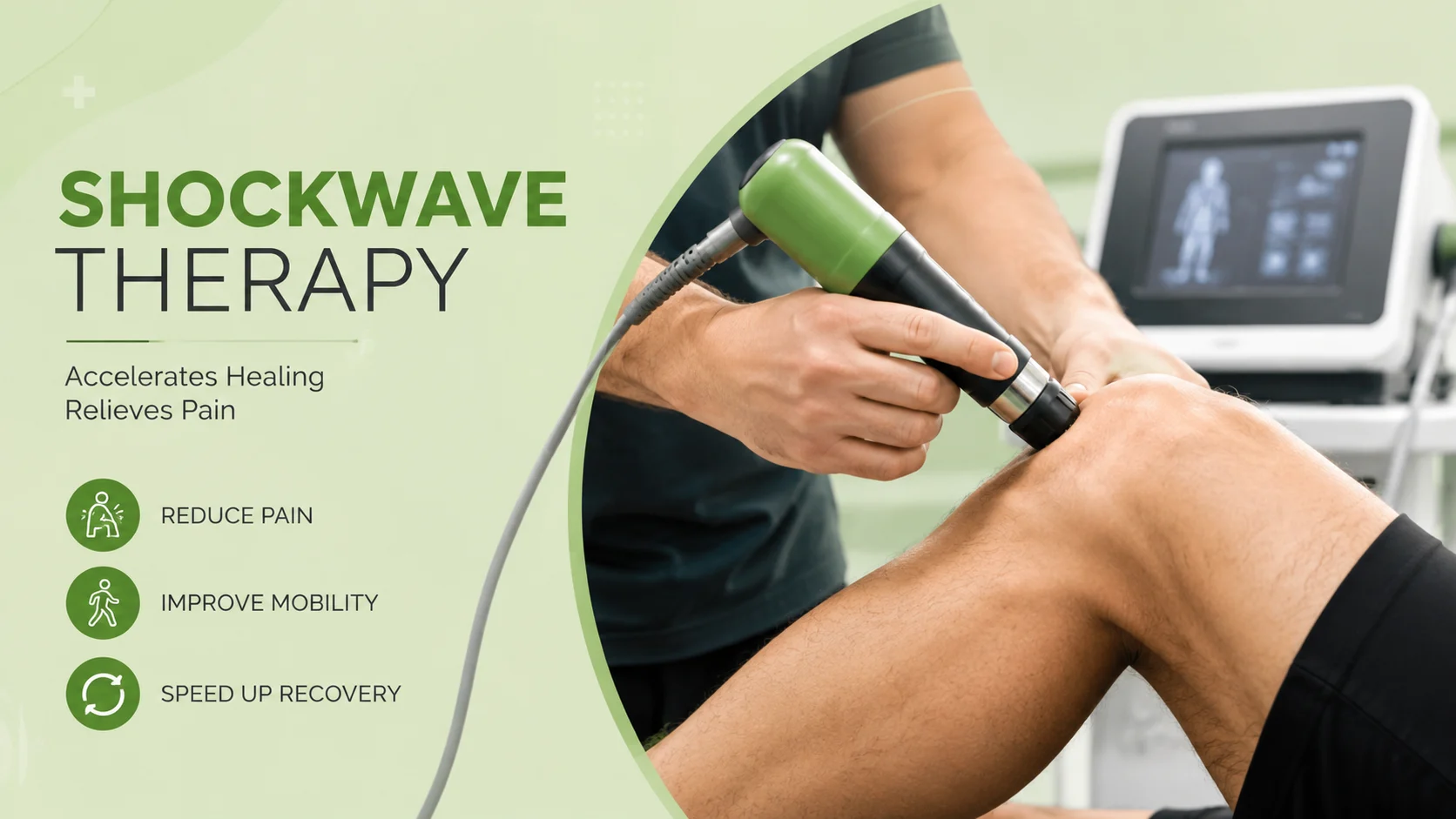
Shockwave therapy, also known as extracorporeal shockwave therapy (ESWT), delivers acoustic waves into a specific area of the body through a handheld applicator.
The treatment is performed externally, meaning that there are no surgical incisions. A clinician places the applicator against the skin and delivers controlled waves to the targeted tissue.
The type and intensity of the waves depend on the condition being treated.
For musculoskeletal problems, shockwave therapy may be used to stimulate healing in certain tendons and soft tissues. For erectile dysfunction, a specialized low-intensity shockwave protocol is used.
It is important to distinguish low-intensity shockwave therapy from the higher-energy shockwaves used for procedures such as breaking up kidney stones. These treatments have different purposes and different energy levels.
How Does Shockwave Therapy Work?
Shockwaves create controlled mechanical stimulation within the treated tissues.
Scientists believe this stimulation can trigger a series of biological responses, including changes in cellular activity, tissue remodeling, and blood-vessel signaling.
One of the most important areas of interest is angiogenesis, the formation of new blood vessels.
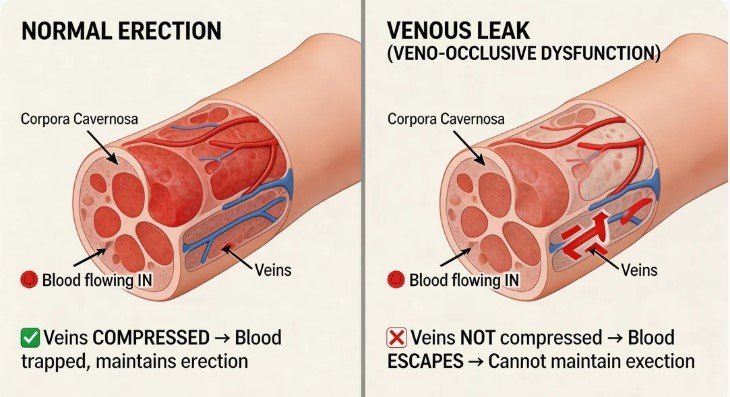
For erectile dysfunction, this is particularly relevant because an erection depends on adequate blood flow into the erectile tissues of the penis.
The proposed effects of low-intensity shockwave therapy include:
- Supporting blood-vessel formation
- Improving local circulation
- Stimulating cellular repair processes
- Promoting tissue remodeling
- Potentially improving vascular function
- Supporting the function of erectile tissue
The exact mechanisms are still being investigated, and researchers continue to study which patients are most likely to benefit.
Shockwave Therapy for Erectile Dysfunction
One of the most widely discussed applications of low-intensity shockwave therapy is erectile dysfunction.
Erectile dysfunction is the persistent difficulty in achieving or maintaining an erection sufficient for satisfactory sexual activity. It can have many causes, including vascular disease, diabetes, high blood pressure, obesity, medication effects, hormonal problems, nerve damage, psychological factors, and previous pelvic or prostate procedures.
In many men, ED has an important vascular component.
Because healthy erections depend on good blood-vessel function, researchers have investigated whether low-intensity shockwaves can improve the vascular environment of penile tissue.
Clinical studies have reported improvements in erectile-function scores among some men receiving Li-ESWT. However, research has used different devices and treatment protocols, making it difficult to establish one universally accepted treatment schedule.
What Do Current Guidelines Say?
The evidence has evolved over time.
The 2025 European Association of Urology (EAU) guidelines state that low-intensity shockwave treatment can be considered, with a weak recommendation, in men with mild vasculogenic erectile dysfunction, in well-informed patients who do not want or are not suitable for oral medication, and in some men with vasculogenic ED who respond poorly to PDE5 inhibitors.
This is an important distinction: shockwave therapy is not recommended as a universal treatment for every type of ED.
Earlier American Urological Association guidance classified low-intensity extracorporeal shockwave therapy as investigational, reflecting the uncertainty that has historically surrounded the evidence.
Therefore, patients should discuss the treatment with a qualified healthcare professional and understand both its potential benefits and its limitations.
Who May Be a Good Candidate for Shockwave Therapy for ED?
Shockwave therapy may be particularly relevant for men whose ED is associated with vascular or blood-flow problems.
A healthcare professional may consider the treatment for men with:
- Mild vasculogenic erectile dysfunction
- Mild to moderate vascular ED
- Cardiovascular risk factors associated with ED
- Diabetes-related vascular dysfunction
- Poor response to PDE5 inhibitor medication
- A preference for a non-invasive treatment
- A desire to explore treatment options beyond medication
However, the underlying cause of ED should be evaluated before treatment.
For example, a man whose ED is primarily caused by severe nerve damage, a major hormonal problem, medication side effects, or significant psychological factors may require a different approach.
What Happens During a Shockwave Therapy Session?
Shockwave therapy is generally performed in an outpatient setting.
The clinician applies a handheld device to the treatment area. A small amount of gel may be applied to improve contact between the applicator and the skin.
For ED treatment, low-intensity acoustic waves are delivered to selected areas of the penile erectile tissue according to the clinician’s treatment protocol.
The procedure does not normally require surgery or injections.
Treatment sessions are generally relatively short, although the exact duration depends on the equipment and protocol being used.
A complete course usually involves multiple sessions rather than a single treatment.
Because different clinical studies have used different treatment schedules, patients should follow the protocol recommended by their qualified provider rather than assuming that every shockwave clinic uses the same approach.
Is Shockwave Therapy Painful?
Low-intensity shockwave therapy is generally well tolerated.
During treatment, some people may feel:
- Tapping or pulsing sensations
- Mild pressure
- Temporary discomfort
- Mild tenderness
- Temporary redness or sensitivity
Most patients do not require anesthesia for low-intensity treatment.
However, individual experiences can differ. Anyone who develops significant or persistent pain should contact the treating healthcare professional.
Potential Benefits of Shockwave Therapy
One of the main advantages of shockwave therapy is that it is non-invasive.
Potential advantages include:
1. No Surgery
Shockwave therapy is delivered externally and does not require surgical incisions.
2. No Injections
Unlike some ED treatments, shockwave therapy does not require injections into the penis.
3. Minimal Downtime
Patients can generally return to normal daily activities after treatment.
4. Potential Vascular Benefits
For men with vascular ED, the treatment is intended to support blood-flow-related mechanisms involved in erections.
5. May Complement Other Treatments
In selected patients, shockwave therapy may be considered alongside established ED treatments rather than necessarily replacing them.
6. Non-Drug Treatment Option
Men who cannot take or do not wish to use certain oral ED medications may discuss shockwave therapy with a qualified clinician.
Shockwave Therapy Compared With ED Medication
Traditional ED medications, particularly PDE5 inhibitors, work by helping the natural erectile response to sexual stimulation.
Shockwave therapy is intended to work differently.
Rather than providing an immediate pharmacological effect, low-intensity shockwave treatment aims to stimulate biological responses within the erectile tissue.
This means the two approaches should not necessarily be viewed as competitors.
Depending on the patient’s condition, a doctor may recommend medication, lifestyle changes, shockwave therapy, or a combination of approaches.
The correct treatment depends on the cause and severity of erectile dysfunction.
How Long Does It Take to See Results?
Shockwave therapy is not generally intended to produce an immediate erection after a single session.
If a patient responds to treatment, improvements may develop gradually over the course of treatment and subsequent follow-up.
The time required can vary considerably between individuals.
Some men may notice changes relatively early, while others may require a longer period before determining whether the treatment has been beneficial.
Because treatment protocols differ between studies and clinics, patients should be cautious of providers promising a specific result within a guaranteed number of days.
Is Shockwave Therapy a Permanent Cure for ED?
There is currently not enough evidence to describe shockwave therapy as a guaranteed permanent cure for erectile dysfunction.
Some men experience meaningful improvement, while others may experience limited or no benefit.
The underlying cause of ED is important. If vascular risk factors such as diabetes, obesity, smoking, high blood pressure, or high cholesterol remain uncontrolled, erectile problems may continue even after treatment.
For this reason, shockwave therapy should ideally be considered as part of a broader approach to men’s sexual and cardiovascular health.
Shockwave Therapy and Cardiovascular Health
Erectile dysfunction can sometimes be an early sign of vascular disease.
The blood vessels responsible for erections are part of the body’s overall vascular system. Problems affecting blood-vessel health can therefore affect erectile function.
Men experiencing persistent ED should not simply treat the symptom without considering their general health.
A healthcare professional may evaluate factors such as:
- Blood pressure
- Blood glucose
- Cholesterol
- Body weight
- Smoking status
- Physical activity
- Medication use
- Cardiovascular risk
- Hormonal health when appropriate
Lifestyle improvements can also play an important role in ED management.
Regular physical activity, maintaining a healthy weight, avoiding tobacco, controlling blood pressure and blood sugar, and following a heart-healthy lifestyle can all support vascular health.
Is Shockwave Therapy Safe?
Low-intensity shockwave therapy appears to be generally well tolerated in clinical studies, but safety and effectiveness depend on the specific treatment, device, energy settings, and patient.
Possible temporary effects can include discomfort, tenderness, redness, or sensitivity.
Patients should have treatment performed by an appropriately qualified healthcare professional who can assess whether the treatment is suitable for them.
It is also important to remember that a treatment being non-invasive does not automatically mean that it is appropriate for everyone.
Choosing a Shockwave Therapy Clinic
The quality of treatment can depend heavily on the provider and the equipment being used.
Before beginning treatment, patients should ask:
- What type of shockwave device is being used?
- Is the treatment specifically designed for low-intensity ED therapy?
- What clinical evidence supports the protocol?
- Who will perform the treatment?
- How many sessions are recommended?
- What results are realistically expected?
- What are the potential risks?
- What happens if the treatment does not work?
- Will the provider investigate the underlying cause of ED?
Patients should be particularly cautious about advertisements promising a 100% success rate, permanent cure, guaranteed results, or immediate restoration of sexual function.
Medical treatments rarely work identically for every patient.
Shockwave Therapy: Frequently Asked Questions
Can shockwave therapy help erectile dysfunction?
Yes. Research suggests that low-intensity shockwave therapy may improve erectile function in some men, particularly those with mild vascular ED. The 2025 EAU guidelines allow its use in selected patients, but the recommendation is weak.
Is shockwave therapy good for ED?
It can be a reasonable option for selected men with vascular erectile dysfunction, particularly mild vasculogenic ED or some men who respond poorly to PDE5 inhibitors. It is not appropriate to claim that it is equally effective for every cause of ED.
Does shockwave therapy hurt?
Low-intensity treatment is generally well tolerated. Some patients may experience mild discomfort, tapping sensations, or temporary tenderness.
How many treatments are required?
There is no single universally accepted treatment schedule. Different studies and clinical protocols use different numbers and frequencies of sessions.
Can shockwave therapy replace Viagra?
Not necessarily. PDE5 inhibitors and shockwave therapy work differently. A doctor can determine whether medication, shockwave treatment, or another approach is more appropriate.
Does shockwave therapy improve blood flow?
Improving vascular function and blood-flow mechanisms is one of the main proposed ways in which low-intensity shockwave therapy may benefit men with vascular ED.
Is shockwave therapy suitable for severe ED?
It may be less suitable when ED is caused by severe or complex underlying conditions. A medical assessment is important before treatment.
The Bottom Line
Shockwave therapy is an innovative, non-invasive treatment that has attracted significant attention in men’s health, particularly for erectile dysfunction.
For ED, low-intensity extracorporeal shockwave therapy may help some men, especially those with mild vasculogenic erectile dysfunction or certain men who respond poorly to PDE5 inhibitors. The 2025 EAU guidelines recognize it as an option for selected patients, although the recommendation remains weak.
The treatment is appealing because it does not require surgery or penile injections and is generally well tolerated. However, it should not be promoted as a guaranteed cure.
The best approach is to identify the underlying cause of erectile dysfunction first and then choose treatment based on the individual’s health, symptoms, preferences, and medical history.
For men considering shockwave therapy, consultation with a qualified urologist or men’s-health specialist can help determine whether the treatment is appropriate and what results can realistically be expected.